
Workplace group chats: helpful tool or HR headache?
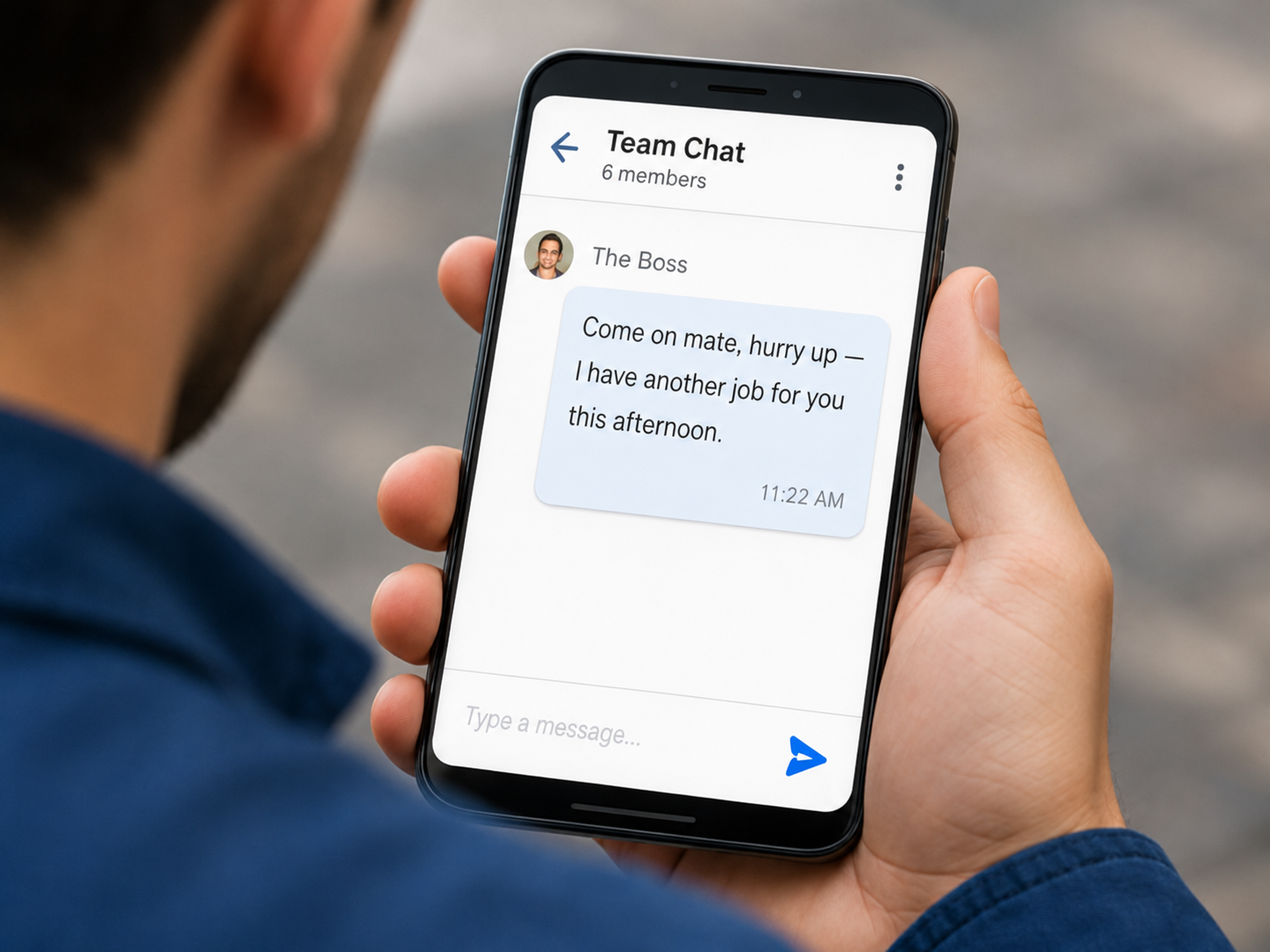
It starts innocently enough - You send a quick text because it is faster than an email. You message a staff member on Insta because that is where they actually reply. You set up a group chat because the team is out on site and photos are easier to send that way.
Most workplaces now use some form of social media-style messaging, whether that is Facebook Messenger, WhatsApp, Instagram, Snapchat or even Teams. It is quick, familiar and often the easiest way to reach people.
So, what is the problem?
The problem is not the technology itself. The problem is that if informal messaging becomes part of work, it also becomes part of the employment relationship. That means tone, timing, privacy, screenshots, group behaviour and power dynamics all start to matter.
Email is still the safest default
For most formal workplace communication, email is the safest default. It is work-related, professional, easy to record and less likely to blur the line between someone’s private life and their employment. It also gives people time to read, think and respond properly. That does not mean every message needs to be an email. A quick text saying “the courier is here” or “can you call me when you are free?” is usually fine. But if the message relates to performance, conduct, discipline, absence, complaints, conflict, warnings or employment changes, email or a formal meeting is usually a much safer option. The more serious the issue, the less suitable a casual message becomes.
Texting is handy, but not for hard conversations
Text messages are useful for simple logistics.
They are not a good way to manage conflict.
Employers sometimes use text messages because they want to avoid an awkward conversation. That might feel easier in the moment, but it often makes the situation worse. A text can sound blunt, rushed or harsher than intended. It can also work against you later if the message becomes part of an employment dispute. Disciplinary matters should not be handled by text. Neither should performance concerns, warnings, resignations, dismissals or anything that requires a fair process. If the issue is serious, slow it down. Arrange a meeting, explain the process and keep proper records.
If an employee texts to start an argument, do not join in
Sometimes the risk goes the other way.
An employee may send an angry text, a long complaint or a message clearly designed to provoke a reaction. Do not match the tone. Do not argue by text. Do not fire back a quick reply while annoyed. A better response is usually short, calm and procedural. Acknowledge the message if needed, then move the matter back into the proper channel.
For example:
“Thanks for your message. I do not think text is the right place to discuss this. We will arrange a time to meet and talk through it properly.”
That gives you space to deal with the issue properly, rather than creating a screenshot that may come back later.
Messaging blurs the boundary
Messaging can be genuinely useful at work - It can help teams share site photos, confirm job details, send quick updates, organise rosters or communicate when people are not sitting at a desk. The risk is that the platform feels personal, but the relationship is still professional. A message from a manager is not the same as a message from a friend. Even a casual comment can carry extra weight because of the authority behind it. That matters with timing too. A manager might send a message at night simply because that is when they remembered it. The employee may read it as pressure to respond outside work hours. If messaging is going to be used for work, the business should be clear about the rules. What platforms are acceptable? What should they be used for? When are staff expected to respond? What should not be sent? Who keeps records if something becomes important later?
The cleanest way to manage this is through a social media and digital communications policy, supported by a signed acknowledgement or consent form where staff are expected to use personal devices or social media-style messaging for work purposes. That policy should set out approved communication channels, expected standards of conduct, after-hours boundaries, privacy expectations and when a matter needs to move out of messaging and into a formal process. The clearer the expectations, the less likely a useful tool becomes a problem.
Group chats need rules
Group chats are where things can get messy quickly.
They are handy for teams on the move, especially where staff need to share photos, job updates or quick instructions. But they can also become a place where poor behaviour is played out in front of everyone. Common problems include inappropriate jokes, offensive material, bullying, gossip, confidential information, staff criticising each other’s work or managers using the group to call someone out publicly. That is a problem. A work group chat is still a workplace space. If a staff member is criticised, mocked or embarrassed in a work chat, the fact it happened on a phone does not make it less serious. If anything, it may make it easier to prove because there is a written record. Messaging can also create problems when staff share “jokes” from work. A Snapchat of someone doing something silly on site might be intended as a laugh, but if it shows unsafe behaviour, bullying, damage, intoxication, misuse of equipment or a breach of company rules, it can quickly become the centrepiece of a formal investigation. The fact that it was sent casually, or was meant to disappear, does not stop it becoming evidence.
A good group chat should have clear rules. Keep it work-related. Do not post offensive or inappropriate content. Do not raise performance issues in front of the team. Do not share confidential information. Do not use the chat to bully, exclude or embarrass others. For some workplaces, a one-way announcement group may be better than an open discussion chat. That allows the business to send key updates without creating a free-for-all.
Be careful on social media
Social media is not the place to manage employment issues.
If an employee has called in sick and later posts a photo from the beach, it may be tempting for the employer to comment. Do not. That may feel like a quick way to challenge what has happened, but it is the wrong forum. It can look public, personal, sarcastic or intimidating, even if that was not the intention. The same applies to commenting on staff photos, stories or posts generally. A manager may think they are being friendly or encouraging, but the employee may experience it differently. Because of the employment relationship, the manager’s words can carry more weight than intended. This is especially important where the comment relates to appearance, personal activities, relationships, sickness, family life or what someone is doing outside work. The safest rule is simple: do not use an employee’s personal social media account to raise work issues. If there is a genuine concern, deal with it through the proper workplace process.
Set the rules before there is a problem
The answer is not necessarily to ban messaging altogether. For many businesses, that would be unrealistic. Messaging is useful. It is fast, practical and often driven for convenience by the staff. The key is to use it deliberately, not accidentally.
A good workplace policy or communication guideline should cover:
· which platforms can be used for work communication
· what types of messages are appropriate
· when staff are expected to respond
· whether after-hours messaging is acceptable
· how work photos should be sent and stored
· what must not be posted in group chats
· who manages group chats
· what happens when someone leaves the business
· when a matter must move out of messaging and into a formal process
A few clear expectations can prevent a lot of problems. Messaging is not automatically bad. It just needs boundaries.
Used well, it can help teams stay connected and get work done. Used poorly, it can create evidence, conflict, privacy concerns, bullying complaints and process issues that could have been avoided. If a message is simple, work-related and appropriate, messaging may be fine. If it is serious, sensitive, emotional or likely to be screenshotted later, it probably belongs somewhere else.