
Making Meetings Count
PRACTICAL BUSINESS GUIDANCE
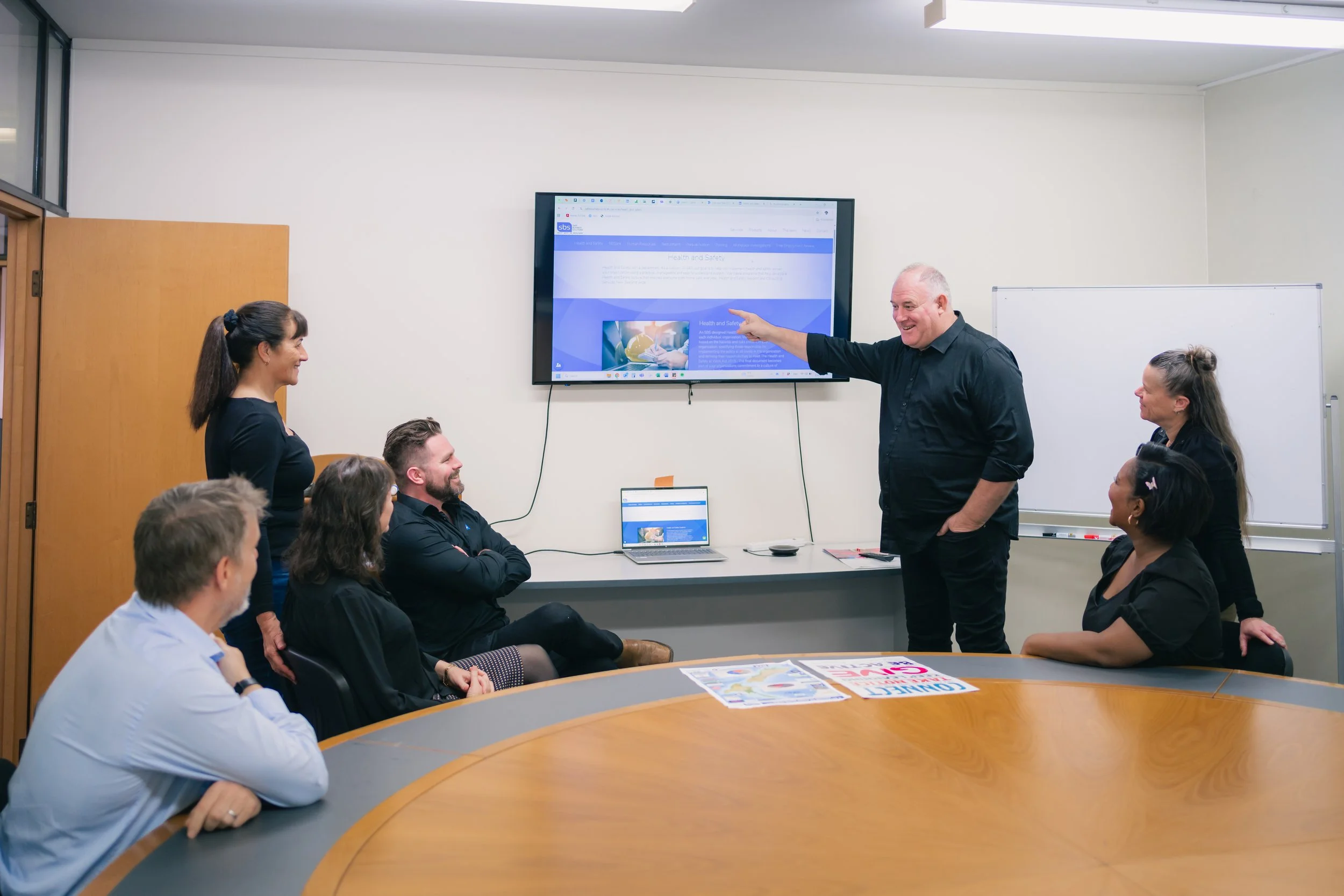
Regular communication is essential to running a safe and effective business. Meetings allow teams and contractors to discuss what is happening, raise concerns, identify risks and agree on what happens next.
There is no single format that suits every business. The right approach depends on the work, risks, team size and where people are located.
On a construction site or in a forestry crew, a daily pre-start may work best. It can cover the day’s activities, changing conditions, hazards, contractors arriving on site and how work will be coordinated.
A transport company may have drivers starting at different times across several locations. Getting everyone into one room may be impossible. Dispatch systems, apps, group messages or texts may be more effective, provided information reaches the right people and workers can respond or raise concerns.
Whatever the industry, businesses should also hold regular health and safety meetings. These allow the team to step back and consider incidents, near misses, training, risk controls and improvements.
Clear communication
〰️
Stronger Accountability
〰️
Better Follow-through
〰️
Clear communication 〰️ Stronger Accountability 〰️ Better Follow-through 〰️
Management and/or governance meetings are equally important. Management meetings help leaders monitor workload, people, finances, customers, operational performance and emerging risks. Governance meetings allow owners or directors to focus on strategy, significant risks, compliance, business sustainability and longer-term direction. In smaller businesses, the same people may attend both—but recognising which “hat” they are wearing helps separate day-to-day management from governance oversight and supports better decisions and accountability.
There is no prize for having the fanciest meeting. Face-to-face over breakfast or after work can suit a team already together. Zoom or Teams may be best when people are spread across different locations. What matters is that the meeting is accessible, useful and relevant.
The best way to ensure meetings happen is to schedule them regularly—ideally at the same time and place. Leaving them unscheduled and repeatedly deferring them because someone is busy achieves the opposite. Someone will always be busy.
Why minutes matter
Minutes do not need to record every sentence. They should accurately summarise the discussions, decisions and agreed follow-up.
Good records create structure and accountability. They demonstrate consultation, reduce disagreements about what was decided and allow actions to be monitored. They provide evidence of how the business has identified and responded to risks.
Minutes alone do not make a business safe or well managed. Their value comes from following through and checking whether agreed changes were effective.
What SBS is doing
SBS is improving how we record consultation meetings, safety meetings and other client discussions. Our aim is to provide a clear and useful report—not a word-for-word transcript or a novel based on the meeting.
Reports will identify important matters discussed, decisions agreed, SBS and client actions, recommendations, suggested next steps and risks.
Formal actions will normally include an owner, due date and status. This avoids the “I thought someone else was doing that” moment at the next meeting.
Understanding the distinctions
A decision records a conclusion or direction agreed during the meeting.
An SBS action is a task our consultant has agreed to complete.
A client action is a task the client has agreed to complete. It should only be recorded when the task, owner and timeframe have been discussed and agreed.
Unless otherwise agreed, SBS consultants will not generally issue actions to clients. We prefer to provide recommendations or suggested next steps. We are there to advise and support—not to arrive with a clipboard and start handing out homework.
A recommendation is SBS’s professional advice about an improvement, control or course of action. If accepted, it may become an agreed client action.
A suggested next step provides a practical way forward, particularly where more information or consultation is needed before a decision is made.
A risk is something that could affect health and safety, compliance, business continuity or another part of the operation. Highlighting it does not automatically create an action, but ensures it remains visible.
Our objective is straightforward: useful meetings, accurate records, clear responsibilities and better follow-through—without turning every sensible suggestion into another item on the to-do list.