
Toolbox Talks That Don’t Suck: Getting Your Team to Buy-In to Health & Safety
By Steve Dixon
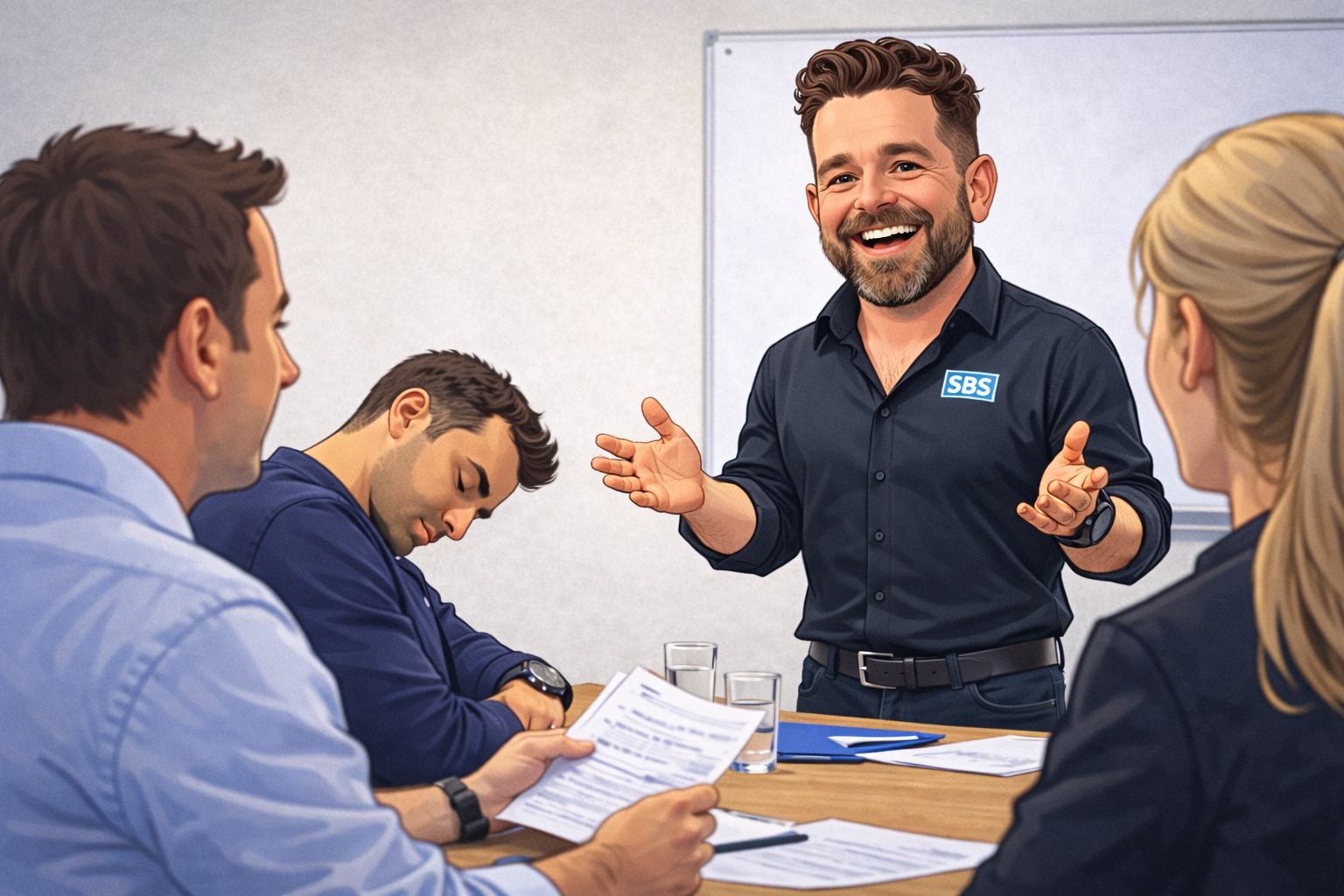
Best case scenario, you’ve got eye contact, a bit of back and forth, and people legitimately thinking about the job ahead. Worst case, you have to hold the meetings standing up, to keep your team awake.
I’ve hosted more than a few Toolbox talks and H&S meetings over my career and for the most part I have legitimately enjoyed them. If you aren’t finding a lot of joy in yours, here are some tips that might actually make a difference:
Keep the length relevant to the content. If it’s a three-person crew running the same job as yesterday, a five-minute check-in and a quick “anything to add?” is probably enough. If you’ve got 15 people in the office, from different sites, for a weekly meeting, take the time to work through it properly. Be flexible. If it’s done, end it. Don’t drag it out just because you booked an hour - no one’s thanking you for that.
Have something pre-prepared. Assume your team won’t come loaded with topics. Bring a few points to get things moving, then start asking questions. Open it up first - “Any incidents this week?” If that goes nowhere, go narrower. “Barry, how was B-site this week, any close calls?” If Barry’s still drawing a blank, give examples. “Anything fall off a truck? Forklifts hit anything? Tools get damaged?” You’ll be surprised how often things come back once you jog the memory. A lot of incidents don’t get reported, not because people are hiding them, but because they’ve moved on to the next job.
Put real focus on near misses. In my opinion, this is where the biggest gains are. Historically, it would be easy to shrug and say “no harm, no foul” - but that same situation could just as easily hurt someone next time. Taking a minute to ask, “why did that happen?” and “how do we stop it happening again?” can make all the difference. When your team see that process unfold, when they contribute to the suggestions, it illustrates the application of health and safety management in real time.
Don’t be afraid of a bit of silence. It’s tempting to fill every gap and carry the whole meeting yourself, but that’s not always where the value is. Raise a topic - lockout tagout for example - and ask if anyone has a story or experience. Then wait. It might feel awkward, but give people a second to think, then another to speak. The quieter ones often have the best insights; don’t make them fight for the talking stick - hand it to them.
Tell stories. Not everyone can remember policy phrasing; but people remember real situations. When something’s gone wrong, or nearly gone wrong, talk about it. The people involved will often be the strongest advocates for the controls that came out of it. It also gets more voices in the room, which keeps everyone else engaged.
Ask questions. Of anyone, at any time. This is primary school stuff - if people think they might get called on, they tend to stay switched on. “What do you reckon, John?” John wasn’t listening. John is now embarrassed. No one wants to be John. Suddenly, everyone’s paying attention.
And finally, motivation. Call it engagement, call it bribery, whatever works. When I was a boy, my dad used to come back from offshore drilling jobs with catalogues full of safety award prizes - binoculars, digital cameras… even guns! Different world. Same principle. Recognise contribution. On a local level, it might just be a bag of Pineapple Lumps? Or a handful of those mini Whittaker’s slabs. Someone contributes; they get a reward. You’d be surprised how quickly participation improves. Or better yet - feed them?
Health and safety doesn’t have to be painful. If your team aren’t looking forward to these meetings, make changes - until they are.