
HSWA Meets ERA - Let the Games Begin!
(The Conflict Between H&S and Employment Legislation in NZ)
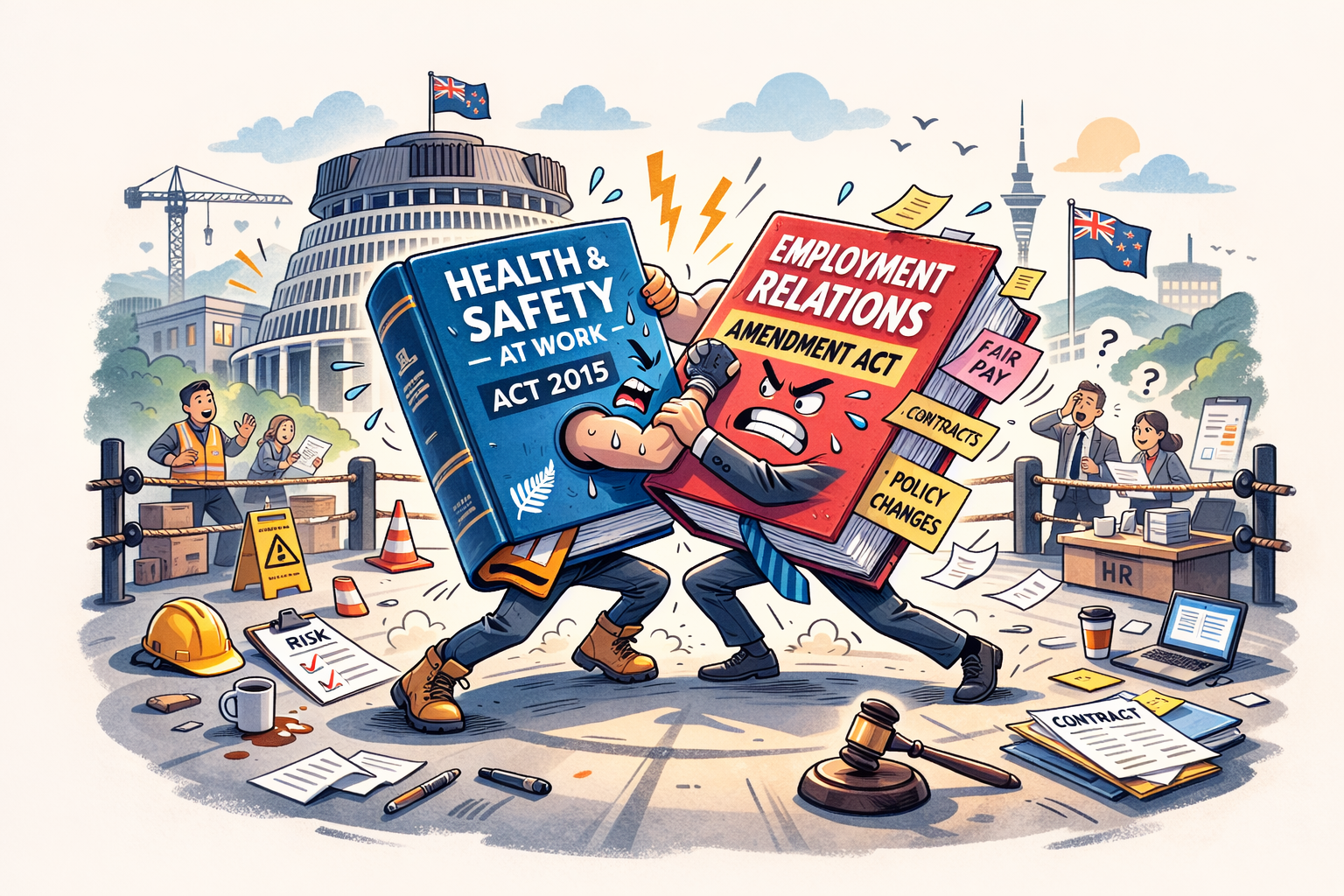
Following recent reforms to both the Health and Safety at Work Act 2015 and the Employment Relations Amendment Act 2025, it feels like a timely moment to address something rarely discussed openly: Health & Safety and Human Resources are often treated as separate disciplines in New Zealand, yet their overlap is becoming more significant every year. Issues such as psychosocial hazards, impairment, fatigue and fitness for work sit squarely across both realms. As regulatory focus expands in these areas, the relationship between H&S and HR cannot remain siloed.
At a legislative level, the tension is obvious. The Health and Safety at Work Act 2015 requires employers to eliminate or minimise risks to health and safety so far as is reasonably practicable. The Employment Relations Act 2000 and the Human Rights Act 1993 require employers to act fairly, reasonably and in good faith, including following proper process, consulting appropriately and avoiding discrimination. The difficulty arises when acting quickly to manage a safety risk appears to conflict with procedural fairness obligations.
Take suspected impairment at work. If an employee appears under the influence of drugs or alcohol, the HSWA places immediate pressure on the employer to remove the risk. That may mean standing the employee down from duties on the spot. Yet employment law requires reasonable grounds, a fair investigation, an opportunity to respond and a procedurally sound decision-making process. Move too fast and the employer risks an unjustified dismissal or disadvantage claim. Move too slowly and, if harm occurs, the scrutiny may come from WorkSafe instead.
The same tension arises with medical information and fitness for work. An employer has a duty under HSWA to ensure workers are fit to perform their role safely and do not pose a risk to themselves or others. At the same time, the Privacy Act and Human Rights Act limit the extent of medical information that can be requested and prohibit discrimination on the basis of disability. Employers must consider light duties, alternative duties or leave options before making decisions that adversely affect the employee’s employment. The balance sits between ensuring safety and respecting privacy, and lawful employment protections.
As psychosocial risk gains greater recognition within New Zealand’s health and safety framework, the border between HR and H&S will continue to blur. If future changes achieve anything, it should be greater alignment between these requirements so that safety management and fair process are not seen as competing obligations but as complementary parts of business leadership.